How Deep Do Metal Detectors Go?
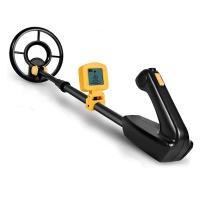
Metal detectors are fascinating devices that have captured the interest of hobbyists, treasure hunters, and professionals alike. One of the most common questions asked by those new to metal detecting is, "How deep do metal detectors go?" The depth at which a metal detector can detect objects is influenced by a variety of factors, including the type of metal detector, the size and type of the object, the soil conditions, and the settings of the device. In this article, we will explore these factors in detail to provide a comprehensive understanding of metal detector depth capabilities.
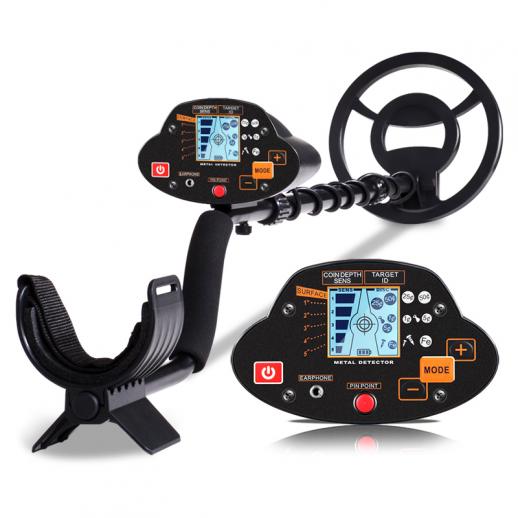
Types of Metal Detectors
There are several types of metal detectors, each designed for specific purposes and with varying depth capabilities. The three main types are:
1. Very Low Frequency (VLF) Detectors: These are the most common type of metal detectors and are widely used by hobbyists. VLF detectors are known for their ability to discriminate between different types of metals, making them ideal for coin shooting and relic hunting. On average, VLF detectors can detect objects up to 8-12 inches deep.
2. Pulse Induction (PI) Detectors: PI detectors are less common but are highly effective in challenging environments such as saltwater beaches and highly mineralized soils. They are known for their ability to detect objects at greater depths compared to VLF detectors. PI detectors can typically detect objects up to 18 inches deep, and in some cases, even deeper.
3. Multi-Frequency Detectors: These detectors operate on multiple frequencies simultaneously, providing a balance between depth and discrimination. They are versatile and can be used in a variety of environments. Multi-frequency detectors can detect objects up to 12-16 inches deep.
Factors Affecting Detection Depth
Several factors influence the depth at which a metal detector can detect objects. Understanding these factors can help users optimize their metal detecting experience.
1. Size and Type of Object: Larger objects are generally detected at greater depths than smaller objects. For example, a coin-sized object might be detected at a depth of 8-12 inches, while a larger object like a metal box could be detected at depths of 2-3 feet or more. Additionally, objects made of highly conductive metals like silver and copper are easier to detect than those made of less conductive metals like iron.
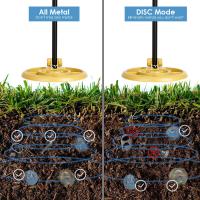
2. Soil Conditions: The type of soil and its mineral content can significantly impact detection depth. Highly mineralized soils can interfere with the metal detector's signals, reducing its depth capabilities. Conversely, low-mineral soils, such as sandy or loamy soils, allow for greater detection depths.
3. Ground Balance: Ground balance is a feature found in many metal detectors that allows the device to ignore the mineral content in the soil. Properly adjusting the ground balance can enhance the detector's depth capabilities, especially in mineralized soils.
4. Coil Size and Type: The size and type of the search coil also play a crucial role in detection depth. Larger coils can detect objects at greater depths but may sacrifice sensitivity to smaller objects. Conversely, smaller coils are more sensitive to small objects but have limited depth capabilities. Additionally, specialized coils, such as double-D coils, can provide better depth and target separation in mineralized soils.
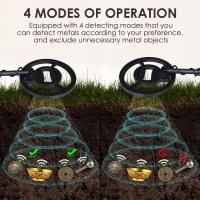
5. Detector Settings: The settings on the metal detector, such as sensitivity and discrimination, can also affect detection depth. Increasing the sensitivity can enhance depth capabilities, but it may also result in more false signals. Adjusting the discrimination settings can help filter out unwanted targets, but it may also reduce the depth at which desirable targets are detected.
Practical Tips for Maximizing Detection Depth
To get the most out of your metal detector and maximize its depth capabilities, consider the following practical tips:
1. Choose the Right Detector: Select a metal detector that is suited to your specific needs and the environment in which you will be detecting. For example, if you plan to search on saltwater beaches, a PI detector may be more effective than a VLF detector.
2. Use the Appropriate Coil: Choose a search coil that matches your detecting goals. For general detecting, a medium-sized coil is a good compromise between depth and sensitivity. For deep-seeking applications, consider using a larger coil.
3. Adjust Ground Balance: Properly adjust the ground balance to match the soil conditions. This can help reduce interference from mineralized soils and improve detection depth.
4. Optimize Settings: Experiment with the sensitivity and discrimination settings to find the optimal balance for your detecting environment. Higher sensitivity can increase depth but may also result in more false signals.
5. Practice and Patience: Metal detecting is a skill that improves with practice. Spend time learning how your detector responds to different targets and soil conditions. Patience and persistence are key to successful metal detecting.
The depth at which a metal detector can detect objects is influenced by a variety of factors, including the type of detector, the size and type of the object, soil conditions, and detector settings. By understanding these factors and following practical tips, users can optimize their metal detecting experience and increase their chances of finding valuable targets. Whether you are a hobbyist or a professional, knowing how deep your metal detector can go is essential for successful treasure hunting.