How Many Panels Do I Need For Solar?
When considering the installation of solar panels, one of the most common questions that arises is, "How many panels do I need for solar?" This question is crucial for anyone looking to transition to solar energy, as it directly impacts the efficiency, cost, and overall feasibility of the solar power system. In this article, we will delve into the various factors that influence the number of solar panels required, providing a comprehensive guide to help you make an informed decision.
Understanding Your Energy Needs
The first step in determining the number of solar panels you need is to understand your energy consumption. This involves looking at your electricity bills to find out your average monthly and annual energy usage, typically measured in kilowatt-hours (kWh). Most utility bills will provide this information, often broken down by month.
For example, if your household uses 900 kWh per month, your annual consumption would be:
\[ 900 \text{ kWh/month} \times 12 \text{ months} = 10,800 \text{ kWh/year} \]
Solar Panel Output
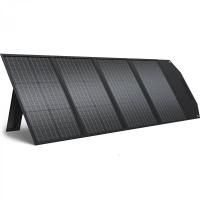
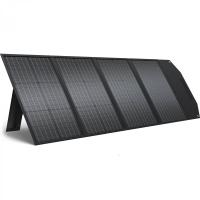
The next factor to consider is the output of the solar panels you plan to install. Solar panels are rated by the amount of power they produce under standard test conditions, usually expressed in watts (W). Common residential solar panels range from 250W to 400W.
To estimate the number of panels needed, you can use the following formula:
\[ \text{Number of Panels} = \frac{\text{Annual Energy Consumption (kWh)}}{\text{Panel Output (W)} \times \text{Average Sunlight Hours per Day} \times 365 \text{ days}} \]
Average Sunlight Hours
The amount of sunlight your location receives is another critical factor. This is often referred to as "peak sunlight hours" and varies depending on geographic location. For instance, a location in Arizona might receive an average of 6 peak sunlight hours per day, while a location in New York might only receive 4 peak sunlight hours per day.
Example Calculation
Let's put this all together with an example. Suppose you live in a location that receives 5 peak sunlight hours per day, and you plan to use 300W solar panels. Your annual energy consumption is 10,800 kWh.
\[ \text{Number of Panels} = \frac{10,800 \text{ kWh}}{300 \text{ W} \times 5 \text{ hours/day} \times 365 \text{ days}} \]
First, convert the panel output to kWh:
\[ 300 \text{ W} \times 5 \text{ hours/day} \times 365 \text{ days} = 547,500 \text{ Wh/year} = 547.5 \text{ kWh/year} \]
Now, divide your annual energy consumption by the annual output per panel:
\[ \text{Number of Panels} = \frac{10,800 \text{ kWh}}{547.5 \text{ kWh/year}} \approx 20 \text{ panels} \]
Roof Space and Panel Efficiency
Another consideration is the amount of roof space available for installing solar panels. Each panel takes up a certain amount of space, typically around 17.6 square feet for a standard 300W panel. Therefore, 20 panels would require:
\[ 20 \text{ panels} \times 17.6 \text{ sq ft/panel} = 352 \text{ sq ft} \]
If your roof cannot accommodate this amount of space, you may need to consider higher-efficiency panels that produce more power per square foot, albeit at a higher cost.
System Losses
It's also important to account for system losses, which can occur due to various factors such as shading, dust, and inefficiencies in the inverter. A common practice is to add a 10-20% buffer to your calculations to account for these losses.
Financial Considerations
The cost of solar panels has decreased significantly over the years, but it's still a substantial investment. The number of panels you need will directly impact the overall cost of your solar power system. It's advisable to get quotes from multiple solar installers and consider financing options, tax credits, and incentives that may be available in your area.
Determining the number of solar panels you need involves a careful analysis of your energy consumption, the output of the panels, the amount of sunlight your location receives, and the available roof space. By taking these factors into account, you can make an informed decision that maximizes the efficiency and cost-effectiveness of your solar power system.
Transitioning to solar energy is a significant step towards sustainability and energy independence. With the right planning and consideration, you can ensure that your solar power system meets your energy needs and provides long-term benefits for both your wallet and the environment.