
Photograph the August 12, 2026 Total Solar Eclipse: What Every First-Time Eclipse Chaser Should Know
2026-07-14 09:55:55
0 Comments
The most anticipated astronomical event of 2026 is almost here! Watch the sky go dark in the middle of the day—it's a once-in-a-lifetime experience! Whether you are a photographer aiming to capture the event, a curious traveler, or simply someone hoping to witness their first total solar eclipse, this guide covers everything a first-time "sun-chaser" needs to know ahead of August 12, 2026.
Why the August 12, 2026 Total Solar Eclipse Is a Must-See Event
On August 12, 2026, the 2026 Total Solar Eclipse, often dubbed the "Eclipse of the Century," will sweep across Greenland, Iceland, and northern Spain, making it one of the most anticipated astronomical events of the decade.
Here's why this eclipse is worth traveling for:
- The first total solar eclipse over mainland Europe in more than 20 years, following the 2015 Faroe Islands eclipse and marking Europe's biggest eclipse event in decades.
- A rare opportunity to witness totality from iconic destinations such as Iceland and northern Spain, combining a bucket-list travel experience with one of nature's greatest spectacles.
- A chance to see the Sun's magnificent corona with your own eyes—a breathtaking sight that can only be experienced during a total solar eclipse, never during a partial eclipse.
- More than two minutes of totality in the best viewing locations, giving observers ample time to experience daylight turning into darkness and capture unforgettable photographs.
- Expected to draw photographers, astronomers, and eclipse chasers from around the world, with many planning their journeys for years for this once-in-a-lifetime event.
While the spectacular astronomical phenomenon of a solar eclipse occurs, on average, every 18 months, it only strikes a particular destination about once every 360 years.
Where and When Can You See the Eclipse?
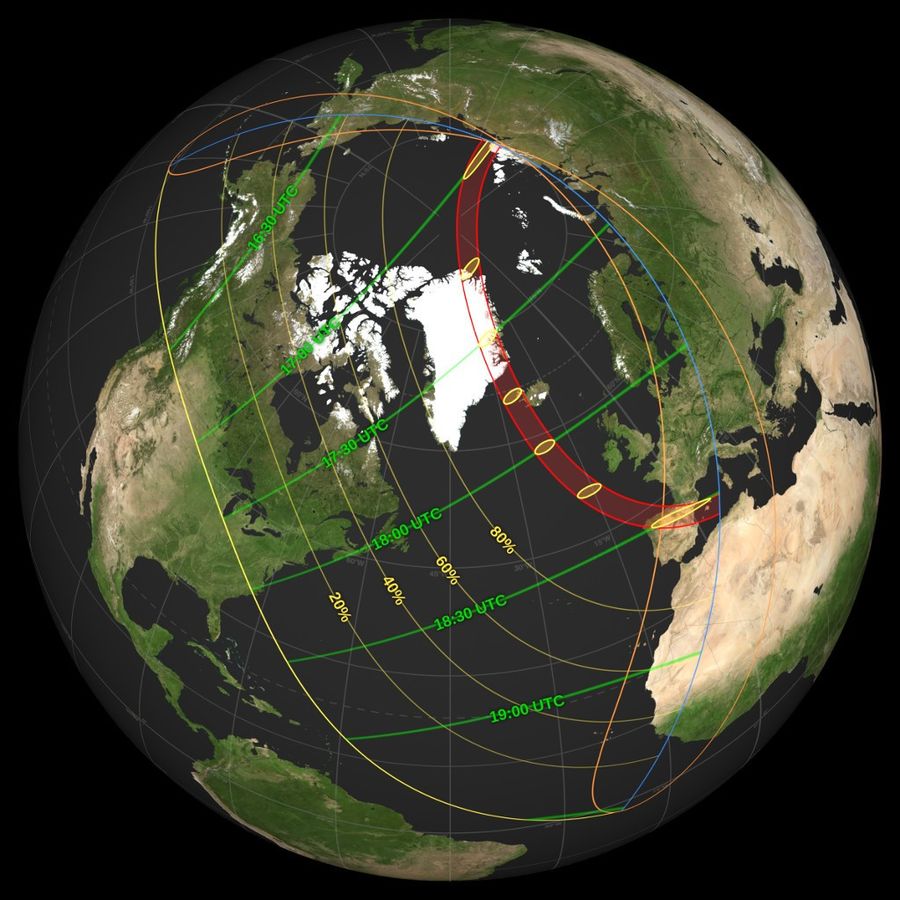
Witnessing a total solar eclipse isn't just about being in the right country — it's about being in the path of totality at exactly the right time. Outside this narrow path, you'll only see a partial solar eclipse, where the Moon never completely covers the Sun and the spectacular solar corona remains invisible.
Path of Totality
On August 12, 2026, the path of totality will cross several regions in the Northern Hemisphere before ending at sunset over Europe.
| Visibility | Locations | What You'll See | Special Highlights |
| Total Solar Eclipse | Greenland, Iceland, northern Spain, a tiny corner of northeastern Portugal, the Atlantic Ocean, northern Russia | Complete darkness, the solar corona, Bailey's Beads, and the Diamond Ring effect. Totality lasts up to about 2 minutes in the best locations. | In parts of Spain and Portugal, totality occurs shortly before sunset, creating a spectacular sunset eclipse with dramatic golden-hour lighting. |
| Partial Solar Eclipse | Most of Europe, the United Kingdom, Canada, Alaska, parts of the northern United States, and northwestern Africa | The Moon covers only part of the Sun. The sky becomes dimmer, but the solar corona is never visible. | In many areas of western Europe and northwestern Africa, the Sun will set while still partially eclipsed, offering the rare chance to witness a partial sunset eclipse. |
Best Viewing Locations
Not every location along the eclipse path offers the same experience. When choosing where to watch, consider four key factors:
- Weather (historical cloud cover)
- Accessibility
- Scenic landscapes
- Photography potential
Best Places to Watch the 2026 Total Solar Eclipse
| Destination | Why Go | Things to Consider | Best For |
| Northern Spain (Oviedo, Peñíscola) | Highest chance of clear skies, excellent transport, sunset eclipse | Can be crowded; book accommodation early | Best Overall |
| Mallorca & Ibiza | Coastal scenery, beaches, easy access, sunset eclipse | Tourist season means higher prices | Landscape & Travel Photography |
| Iceland (Snæfellsnes Peninsula, Patreksfjörður) | Dramatic volcanoes, glaciers, waterfalls, longest totality in Iceland | Cloudy weather is common | Epic Landscape Photography |
| Reykjavík | Easiest logistics, international airport, city amenities | Shorter totality than western Iceland | First-Time Eclipse Travelers |
| Greenland / Arctic Cruises | Remote Arctic scenery, unique expedition experience | Extremely expensive and weather dependent | Adventure Travelers |
| Portugal | Only a tiny area enters totality | Not recommended—the totality path barely crosses an uninhabited corner | Partial Eclipse Only |
- Static eclipse maps: To get less in the weeds, check out the eclipse maps on the National Eclipse website. While this online resource was formed for the 2017 American eclipse, it has continued to provide eclipse maps and information for total and annular eclipses around the world.
- Weather recommendations in this guide are based on long-term cloud climatology and Jay Anderson's analyses published on Eclipsophile, a leading resource for eclipse weather forecasting that is widely referenced by NASA, Sky & Telescope, and experienced eclipse chasers.
What Will You Actually See During Totality?
If you've never experienced a total solar eclipse before, it's difficult to imagine just how dramatic totality really is. Unlike a partial eclipse, where the Sun always remains visible, totality transforms the entire environment in just a few moments.
- Daylight turns into twilight. As the Moon completely covers the Sun, the sky darkens unexpectedly, creating an eerie, sunset-like glow across the horizon.
- The Sun's magnificent corona becomes visible. This faint, glowing outer atmosphere of the Sun is one of the rarest sights in nature and can only be seen during a total solar eclipse.
- The Diamond Ring Effect and Bailey's Beads. Just before and after totality, sunlight shines through valleys on the Moon's surface, producing two of the eclipse's most iconic visual phenomena.
- A noticeable change in the surroundings. Temperatures may drop, shadows become unusually sharp, and birds and other wildlife often react as if night has arrived.
They are also the reason why so many photographers travel across the world in pursuit of totality.
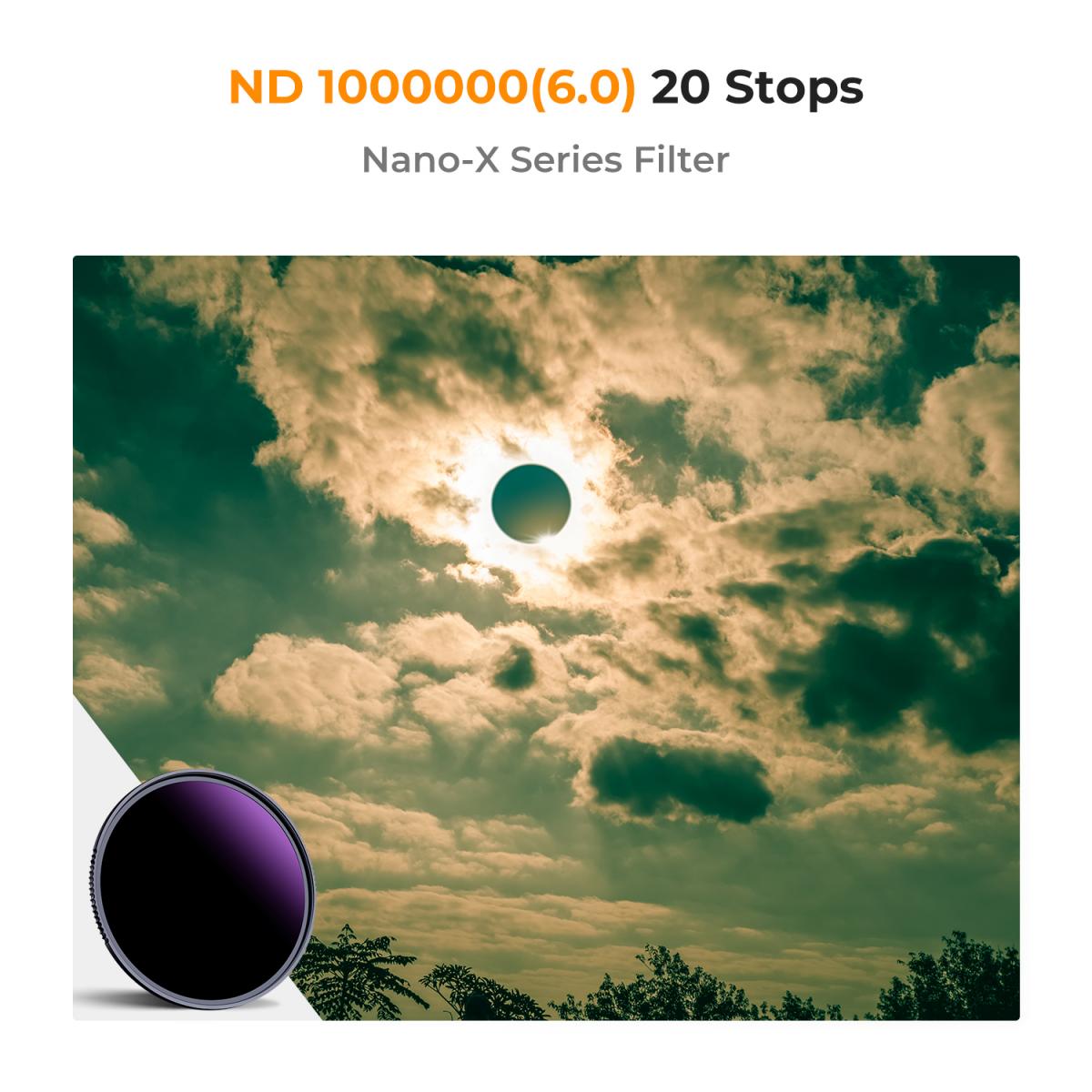
However, seeing and photographing the eclipse safely requires the right protection.:
- Protect your eyes: Looking directly at the Sun without proper solar protection can cause permanent eye damage.
- Protect your camera: An unfiltered camera, telescope, or smartphone lens can be damaged by the Sun's intense light.
Understanding when to use a solar filter—and when it can be safely removed—is one of the most important things every first-time eclipse chaser should know.
Watch Safely: Protect Your Eyes and Your Camera
Eye Safety
- Never look directly at the Sun without proper eye protection, except during the brief period of totality.
- Always use ISO 12312-2 certified eclipse glasses to safely observe the partial phases of the eclipse.
- Only during totality is it safe to remove your eclipse glasses and solar filter. Once the first rays of sunlight reappear, put them back on immediately.
Camera Safety
Your eyes aren't the only thing that need protection—your camera does too. Whether you're photographing the eclipse with a DSLR, mirrorless camera, telescope, or smartphone, pointing an unprotected lens directly at the Sun can damage your equipment and ruin your chance of capturing this once-in-a-lifetime event.
To keep both your gear and your images safe, follow these essential guidelines:
- Always use a solar filter with the appropriate optical density when photographing any partial phase of the eclipse. Different cameras and shooting styles may benefit from different filter strengths, but never photograph the Sun without proper solar protection.
- Remove the solar filter only during totality, when the Sun is completely covered by the Moon. As soon as the first bright edge of the Sun reappears, replace the filter immediately.
- Smartphones need protection too. If you're using your phone to photograph the eclipse, attach a dedicated phone solar filter before aiming it at the Sun to protect the camera and improve image quality.
Recommended Eclipse Setup
| If you want to... | Recommended Setup |
| Capture professional-quality eclipse photos | DSLR or Mirrorless Camera + 300–600mm Telephoto Lens + ND100000 Solar Filter + Tripod |
| Take great eclipse photos with your phone | Smartphone + Phone Solar Filter |
| Simply enjoy the eclipse safely | ISO 12312-2 Certified Eclipse Glasses |
Essential Eclipse Filters
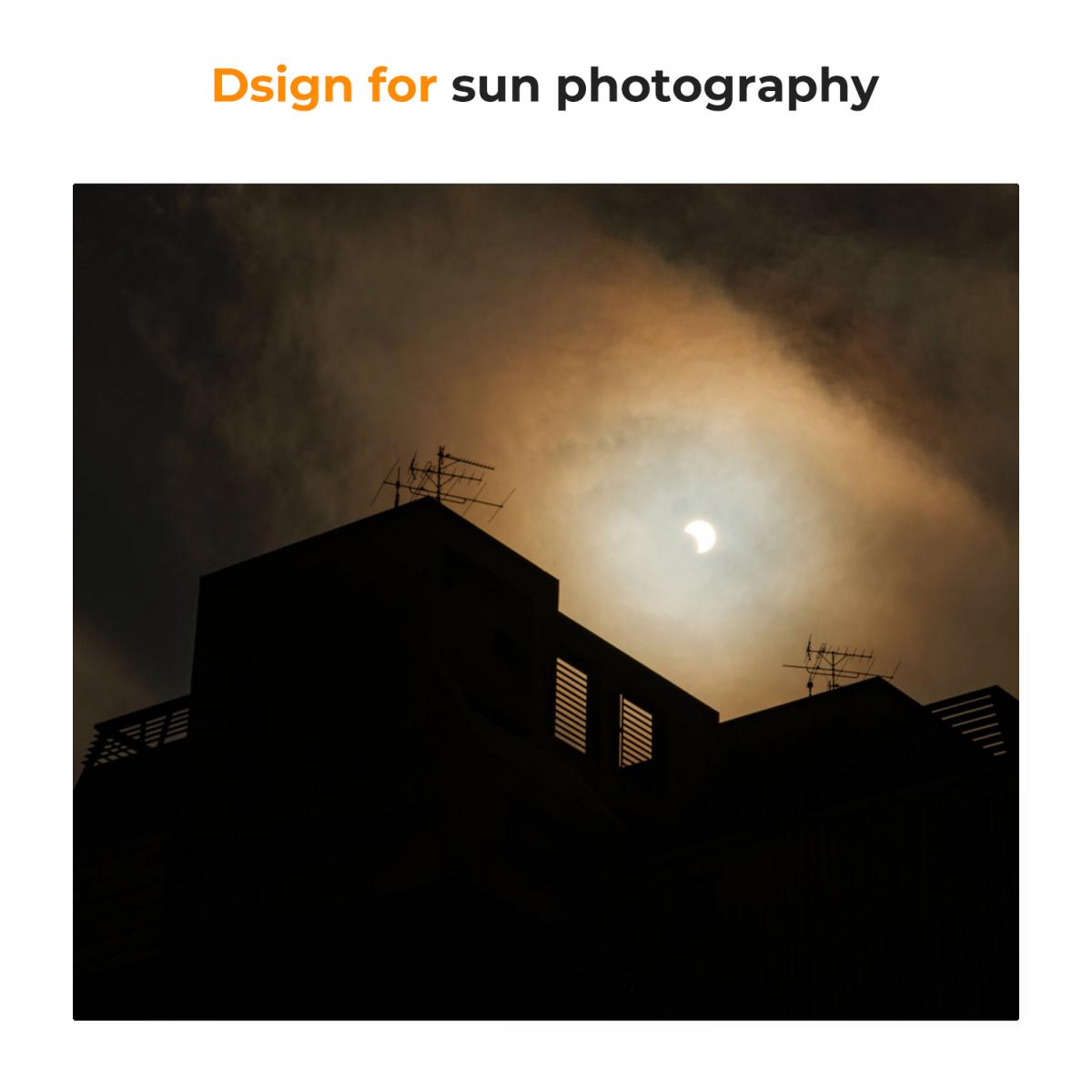
To safely photograph the August 12, 2026 Total Solar Eclipse, make sure you have the right filter for your equipment:
| Shooting Setup | Recommended Filter | Optical Density | Recommended Use |
| DSLR / Mirrorless Camera | 16.6-stop Solar Filter (ND100000) | OD 5.0 (16.6 stops) | The industry-standard density for safely photographing the Sun throughout the partial phases of a solar eclipse. Ideal for most eclipse photography setups. |
| Telephoto Lens / Telescope | 20-stop Solar Filter (ND1000000) | OD 5.0 (16.6 stops) or OD 6.0 (20 stops) | Choose OD 5.0 for the standard eclipse photography experience, or OD 6.0 if you prefer longer exposure times or additional light reduction with high-magnification setups. |
| Smartphone | Phone Solar Filter | Optimized for smartphone cameras | Designed for safe eclipse photography with smartphones while improving image quality during the partial phases. |
- Tip: For most photographers, an OD 5.0 (ND100000) solar filter is the industry-standard choice for safely photographing a solar eclipse. OD 6.0 (ND1000000) offers additional light reduction and may be preferred for certain cameras, lenses, or personal shooting styles.
Recommended Gear: Choosing a high-quality solar filter is one of the most important preparations for eclipse photography. If you're looking for reliable eclipse gear, our Solar Filter are designed specifically for the August 12, 2026 Total Solar Eclipse, providing safe solar protection without compromising image quality.
How to Photograph the Eclipse Like a Pro
A total solar eclipse happens only once, but with the right preparation, you'll have the opportunity to capture images you'll treasure for a lifetime. Here's how to maximize your chances of success.
Essential Camera Gear
| Equipment | Why You Need It |
| DSLR or Mirrorless Camera | Offers full manual control and the best image quality. |
| Telephoto Lens (300–600mm) | Fills the frame with the Sun while revealing details of the corona during totality. |
| Sturdy Tripod | Keeps your composition stable throughout the eclipse sequence. |
| Remote Shutter Release | Reduces camera shake and lets you shoot hands-free during the most critical moments. |
| Extra Batteries & Memory Cards | Continuous shooting and Live View can drain batteries faster than expected. |
Note: Note: Your solar filter is just as essential—but since we've already covered eclipse safety in the previous section, make sure it's securely attached before the partial phases begin. For a complete checklist of recommended eclipse photography gear, including solar filters, smartphone filters, and other accessories, visit our dedicated August 12, 2026 Total Solar Eclipse collection.
Recommended Starting Camera Settings
Rather than chasing the perfect exposure, start with a simple baseline and adjust as needed.
| Setting | Recommendation |
| Mode | Manual |
| Image Format | RAW |
| ISO | 100 |
| Aperture | f/8–f/11 |
| Focus | Manual (focused before the eclipse begins) |
| Drive Mode | Continuous Shooting |
| White Balance | Daylight or Auto |
Tip: Exposure settings will vary dramatically between the partial phases, totality, and the Diamond Ring effect. Shooting in RAW gives you the greatest flexibility when editing later.
Capture the Best Moments
Don't spend the entire eclipse looking through your viewfinder. The most memorable eclipse photographs often come from careful preparation—not constant adjustments.
For first-time eclipse photographers, prioritize these key moments:
- Partial Phases – Capture the Moon gradually covering the Sun using your solar filter.
- Diamond Ring Effect – Be ready for the brilliant flash of sunlight just before and after totality.
- Totality – Photograph the solar corona, then take a moment to simply enjoy the experience.
- Wide-Angle Scene – If possible, use a second camera or smartphone to capture the changing landscape and the reactions of people around you.
Remember: Practice your camera setup before eclipse day so you can focus on the experience instead of adjusting settings when every second counts.
Eclipse Day Checklist
Before heading out on eclipse day, make sure you have everything you need for a safe and successful viewing experience.
Viewing Essentials
- □ ISO 12312-2 certified eclipse glasses
- □ Camera solar filter
- □ Smartphone solar filter (if photographing with a phone)
- □ Printed or downloaded eclipse schedule
- □ Weather forecast and backup viewing location
- □ Fully charged phone
Photography Essentials
- □ DSLR or mirrorless camera
- □ Telephoto lens (300–600mm recommended)
- □ Sturdy tripod
- □ Remote shutter release
- □ Extra batteries
- □ Memory cards
- □ Lens cleaning cloth
Comfort Essentials
- □ Folding chair
- □ Sunscreen
- □ Hat
- □ Water
- □ Snacks
- □ Power bank
Pro Tip: Pack your gear the night before and test your camera setup in advance. On eclipse day, you'll want to spend your time enjoying the experience—not searching for missing accessories.
Frequently Asked Questions
Can I photograph a solar eclipse with my phone?
Yes. Modern smartphones can capture impressive eclipse photos, but you should always use a dedicated phone solar filter during the partial phases. Remove the filter only during totality if you're inside the path of totality.
Do I really need a solar filter for my camera?
Yes. Any camera, telephoto lens, or telescope pointed directly at the Sun requires a certified solar filter during the partial phases. Without one, both your equipment and your eyesight may be permanently damaged.
Can I use a regular ND filter instead of a solar filter?
No. A standard ND filter is designed to reduce visible light for everyday photography—it is not designed for direct solar observation. Only a certified solar filter provides the level of protection required for photographing a solar eclipse safely.
Is it safe to photograph the eclipse without a filter?
Only during the brief period of totality. At every other stage of the eclipse, a solar filter is essential to protect both your eyes and your camera.
What focal length is best for eclipse photography?
For close-up images of the Sun, a focal length between 300 mm and 600 mm is ideal. Wider lenses are great for capturing the surrounding landscape and the unique atmosphere of the eclipse.
Can I view the eclipse through binoculars?
Only if the binoculars are fitted with proper solar filters on the front objective lenses. Never use eclipse glasses alone while looking through binoculars or a telescope, as the concentrated sunlight can cause serious eye injury.
Conclusion: Be Ready for a Once-in-a-Lifetime Experience
The August 12, 2026 Total Solar Eclipse will last for only a few unforgettable minutes, but the memories—and photographs—you bring home can last a lifetime. Whether you're traveling to Iceland, northern Spain, or another location along the path of totality, careful planning is the key to making the most of this extraordinary event.
By choosing the right viewing location, understanding eclipse safety, and preparing your camera equipment in advance, you'll be ready to experience one of nature's most breathtaking spectacles with confidence. Most importantly, don't wait until the last minute—essential eclipse gear often sells out as eclipse day approaches.
Ready to prepare for the 2026 Total Solar Eclipse? Explore the K&F Concept August 12, 2026 Total Solar Eclipse Collection, featuring ND100000 Solar Filters, ND1000000 Solar Filters, Phone Solar Filters, and other carefully selected accessories designed to help you safely observe and photograph this once-in-a-lifetime celestial event.
Leave your comment
Note: HTML is not translated!